Introduction
Aluminum die casting is one of the most widely used metal manufacturing processes. It is mainly applied to the production of high-precision and large-volume metal components. This process is especially suitable for industries that require lightweight structures, dimensional accuracy, and stable mass production, such as home appliances, automotive, electronic communication, mechanical engineering, and industrial equipment.
For OEM / ODM customers, understanding the aluminum die casting process is an important basis for selecting the right manufacturing solution. A clear understanding of each process step helps optimize product design, control manufacturing costs, reduce defect risks, and ensure long-term stable supply.
This article systematically explains the complete aluminum die casting process, including mold design, melting, die casting forming, post-processing, and inspection. It focuses on manufacturing logic, quality control points, and typical application scenarios.
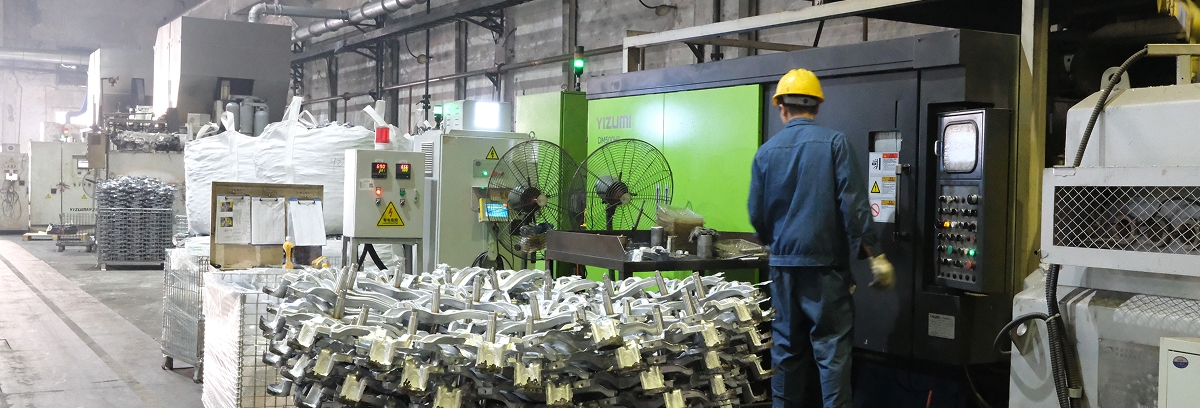
What Is the Aluminum Die Casting Process
Aluminum die casting is a manufacturing method in which molten aluminum alloy is injected into a steel mold cavity under high pressure and high speed, and then rapidly formed. After the molten metal fills the cavity and solidifies, the casting is obtained with dimensions and shape close to the final product, which can be used directly or with limited secondary machining.
Compared with other casting processes, aluminum die casting provides higher dimensional accuracy, better surface quality, and more consistent product performance. It is therefore very suitable for large-scale mass production.
What Types of Aluminum Die Casting Are There
According to different forming methods and pressure conditions, aluminum die casting mainly includes the following types:
High Pressure Die Casting (HPDC)
This is the most common aluminum die casting process. Molten aluminum is injected into the mold at high pressure and high speed. It is suitable for complex structures, thin walls, and parts with high dimensional accuracy requirements, such as motor housings, brackets, and home appliance structural parts.
Low Pressure Die Casting (LPDC)
Molten aluminum is injected into the mold under relatively low pressure. The metal flow is more stable. This process is suitable for parts with higher requirements for internal density and mechanical properties, such as certain automotive structural components.
Vacuum Die Casting
Vacuum is applied before injection to reduce the gas inside the mold cavity. This process can significantly reduce porosity defects and is suitable for aluminum die casting parts with high requirements for airtightness and welding performance.
Different die casting methods should be selected based on product structure, performance requirements, and production volume.
A Complete Aluminum Die Casting Process Usually Includes the Following Steps:
Mold design and manufacturing
Aluminum alloy melting
Injection and filling
Cooling and solidification
Ejection
Trimming and finishing
Quality inspection
Step 1: Mold Design and Manufacturing
Mold design is the foundation of the aluminum die casting process. Its quality directly affects dimensional accuracy, surface quality, production efficiency, and mold life.
Key points of mold design include:
Parting line layout
Draft angle design
Wall thickness distribution
Gating and runner system
Venting system
Cooling system
A well-designed mold ensures smooth metal flow, reduces porosity and shrinkage defects, and improves forming efficiency. In OEM projects, the mold must also consider long-term production stability, maintenance cost, and process adjustment flexibility.
Step 2: Aluminum Alloy Melting
During aluminum die casting, aluminum alloy ingots are melted under controlled conditions. Common materials include ADC12 and A380 aluminum-silicon alloys.
During melting, temperature and alloy composition must be strictly controlled. Degassing and slag removal are also required to reduce internal defects and improve casting quality, providing stable molten metal for the die casting process.
Step 3: Injection and Filling
Molten aluminum is injected into the mold cavity through the injection system under high pressure and high speed. Fast and stable filling ensures complete forming of thin walls and complex structures.
Proper control of injection speed, pressure, and switching point is critical to avoid defects such as cold shuts, misruns, turbulence, and gas entrapment.
Step 4: Cooling and Solidification
After filling, the molten aluminum rapidly solidifies under controlled cooling conditions. Efficient and uniform cooling helps form a stable metal structure, reduce deformation, and maintain dimensional consistency.
Cooling system design directly affects cycle time, mold life, and mechanical properties of the casting.
Step 5: Ejection, Finishing, and Inspection
After solidification, castings are ejected by an automatic ejection system. Gates and flash are removed, followed by cleaning and finishing processes. According to product requirements, CNC machining, surface treatment, or assembly may be applied.
Quality inspection usually includes:
Dimensional inspection
Visual inspection
Airtightness or strength testing
Material and performance testing
Systematic inspection ensures that each batch of aluminum die casting parts meets design and application requirements.
Applications of Aluminum Die Casting
Aluminum die casting is widely used in:
Motor housings
Gearbox housings
Structural brackets
Heat dissipation components
Automotive parts
Home appliance structural parts
Through integrated forming, assembly steps can be reduced and overall product reliability can be improved.
Conclusion
Aluminum die casting is an efficient and stable metal manufacturing process suitable for mass production of complex aluminum alloy parts. From mold design to final inspection, each process step directly affects product quality and delivery stability.
For OEM / ODM projects, selecting a manufacturer with mature aluminum die casting process capability, a complete quality system, and long-term mass production experience is critical to ensure product quality, stable supply, and cost control.
FAQ
What aluminum materials are commonly used in aluminum die casting, and what are the differences
Common aluminum alloys include ADC12 and A380. ADC12 has good fluidity and is suitable for complex structures. A380 offers balanced strength and overall performance and is suitable for structural and load-bearing parts.
What types and tonnage ranges of die casting machines are used for aluminum die casting
Die casting machines are mainly divided into cold chamber and hot chamber types. Aluminum die casting mainly uses cold chamber machines. Common tonnage ranges from 160T to 1650T, covering small precision parts and large structural parts.
What are the advantages of aluminum die casting compared with other casting processes
Compared with sand casting or gravity casting, aluminum die casting provides higher dimensional accuracy, better surface quality, higher production efficiency, and better suitability for mass production.
Is aluminum die casting suitable for long-term OEM projects
Yes. With stable molds, mature processes, and systematic quality control, aluminum die casting is well suited for long-term, high-volume, and stable OEM supply.
How can porosity and defects be reduced in aluminum die casting
By optimizing mold design, controlling melting quality, adjusting injection parameters, and applying vacuum die casting and process monitoring, defect risks can be effectively reduced.